
Smart Mirrors for Virtual Fitness Coaching
Introduction
In contemporary lifestyles, maintaining physical fitness presents significant challenges due to demanding schedules, limited access to traditional gyms, and disruptions such as global health crises. Smart fitness mirrors have emerged as a transformative solution, integrating advanced technology into home environments to facilitate virtual fitness coaching. These devices appear as conventional full-length mirrors when inactive but activate to reveal high-resolution interactive displays. Equipped with cameras, sensors, and artificial intelligence (AI), they deliver live or on-demand classes, real-time form correction, and personalized workout plans.
 |
| Smart Mirrors for Virtual Fitness Coaching |
As of 2025, the smart fitness mirror market has experienced substantial growth, with estimates projecting values ranging from approximately USD 359 million to higher figures, driven by increasing demand for connected home fitness solutions. This article examines the underlying technology, key benefits, prominent models, potential limitations, and future developments in this innovative sector.

Smart fitness mirrors employ a combination of hardware and software components to create an immersive coaching experience. The core structure consists of a reflective surface overlaid with a high-definition LCD or LED display, typically ranging from 40 to 60 inches. When powered off, the device functions as a standard mirror; activation transforms it into a digital interface.
Key technological features include:
- Cameras and Motion Tracking: Most models incorporate wide-angle or 3D depth-sensing cameras capable of tracking multiple body joints (often 32 or more). Computer vision algorithms analyze user movements in real time, enabling accurate repetition counting and posture assessment.
- Artificial Intelligence for Form Correction: AI processes visual data to provide immediate feedback, such as verbal cues or on-screen overlays highlighting improper alignment. Advanced systems, like those using proprietary technologies (e.g., ReflectAI or Motion Engine), score form quality numerically and suggest adjustments to enhance safety and efficacy.
- Audio and Connectivity: Integrated speakers, Bluetooth compatibility for heart rate monitors or headphones, and Wi-Fi enable seamless streaming of classes. Some devices support gesture controls or voice commands for hands-free operation.
- Personalization and Integration: Machine learning adapts workouts based on user performance, goals, and progress. Integration with wearables or smart home ecosystems allows tracking of metrics like heart rate and calories burned.
These elements collectively replicate the guidance of a professional trainer, reducing injury risks and optimizing results.
Benefits of Smart Mirrors for Virtual Fitness Coaching
Smart fitness mirrors offer numerous advantages over traditional gym memberships or standalone video workouts:
- Convenience and Accessibility: Users can exercise at home without commuting, scheduling constraints, or exposure to crowded facilities. This is particularly valuable for individuals with busy routines or those preferring privacy.
- Personalized Coaching: Real-time AI feedback ensures proper technique, which is critical for preventing injuries and maximizing effectiveness—features often absent in pre-recorded videos.
- Variety and Motivation: Extensive libraries include diverse classes (e.g., strength training, yoga, HIIT, cardio, pilates), live sessions, and community features like leaderboards to foster engagement.
- Space Efficiency: Wall-mounted or freestanding designs occupy minimal floor space while doubling as decor.
- Health Monitoring: Integration with biometric devices provides comprehensive progress tracking, including body composition estimates in select models.
- Cost-Effectiveness Long-Term: Initial investments are offset by eliminating recurring gym fees, though subscription models for content access apply.
Studies and user reports indicate improved adherence to fitness routines, with many achieving consistent results comparable to in-person training.
Popular Models in 2025
Several brands dominate the market, each with distinct strengths:
- Lululemon Studio Mirror: Known for its sleek, minimalist design and boutique-style classes. It emphasizes cardio, yoga, and bodyweight workouts, with optional personal training via camera. Pricing starts around USD 1,495, plus a monthly subscription.
 |
| Smart Mirrors for Virtual Fitness Coaching |
- FORME Studio: Features a touchscreen with high-resolution 4K display and options for integrated resistance training. It supports one-on-one virtual coaching and a broad class variety.


- Tempo Studio: Excels in strength training with bundled smart weights and advanced 3D tracking for precise form feedback. It includes storage for equipment and personalized programs.
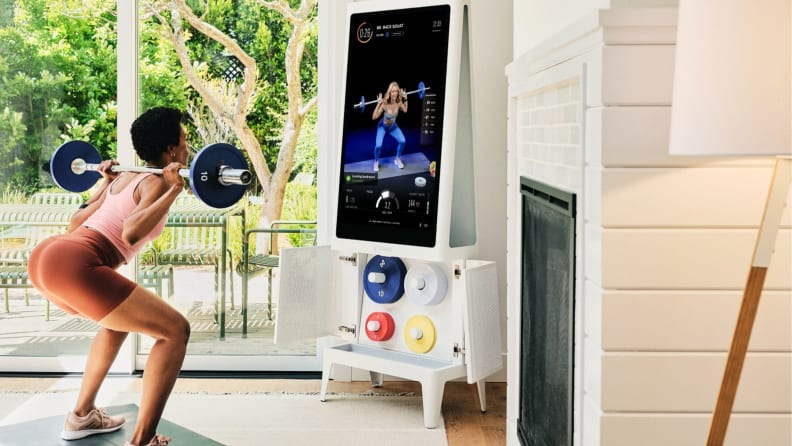
- NordicTrack Vault: A freestanding unit with built-in equipment storage, utilizing iFit for guided workouts. It appeals to users seeking an all-in-one solution.

- MAGIC AI Mirror and Fiture: Emerging leaders with robust AI for gesture control, rep scoring, and hyper-personalized plans. MAGIC stands out for lifetime content access without ongoing subscriptions.
Other notable options include Echelon Reflect (budget-friendly) and Tonal (wall-mounted digital weights, though less mirror-focused).
Comparisons highlight trade-offs: strength-oriented models like Tempo or Tonal prioritize heavy lifting, while others focus on versatility.
Challenges and Limitations
Despite their advantages, smart fitness mirrors present certain drawbacks:
- High Initial Cost: Devices range from USD 1,000 to over USD 3,000, plus subscriptions (USD 39–50 monthly for most).
- Subscription Dependency: Access to premium content often requires ongoing fees, though some models offer lifetime inclusion.
- Space and Installation Requirements: Wall mounting or dedicated areas are needed; professional installation may add expenses.
- Technical Issues: Connectivity problems, software glitches, or limited form correction in entry-level models have been reported.
- Market Consolidation: Several popular models (e.g., original Mirror variants, NordicTrack Vault in some regions) have faced discontinuation or reduced availability by late 2025.
- Privacy Concerns: Camera usage raises data security questions, though reputable brands implement encryption.
These factors necessitate careful evaluation based on individual needs and budget.
Future Prospects
The smart fitness mirror sector is poised for continued expansion, with projected compound annual growth rates of 6–17% through 2030, depending on market analyses. Advancements may include enhanced AI for predictive coaching, augmented reality overlays, deeper integration with health apps, and subscription-free models. Social features, such as virtual group classes or community challenges, are likely to increase motivation.
career information portal ...
